
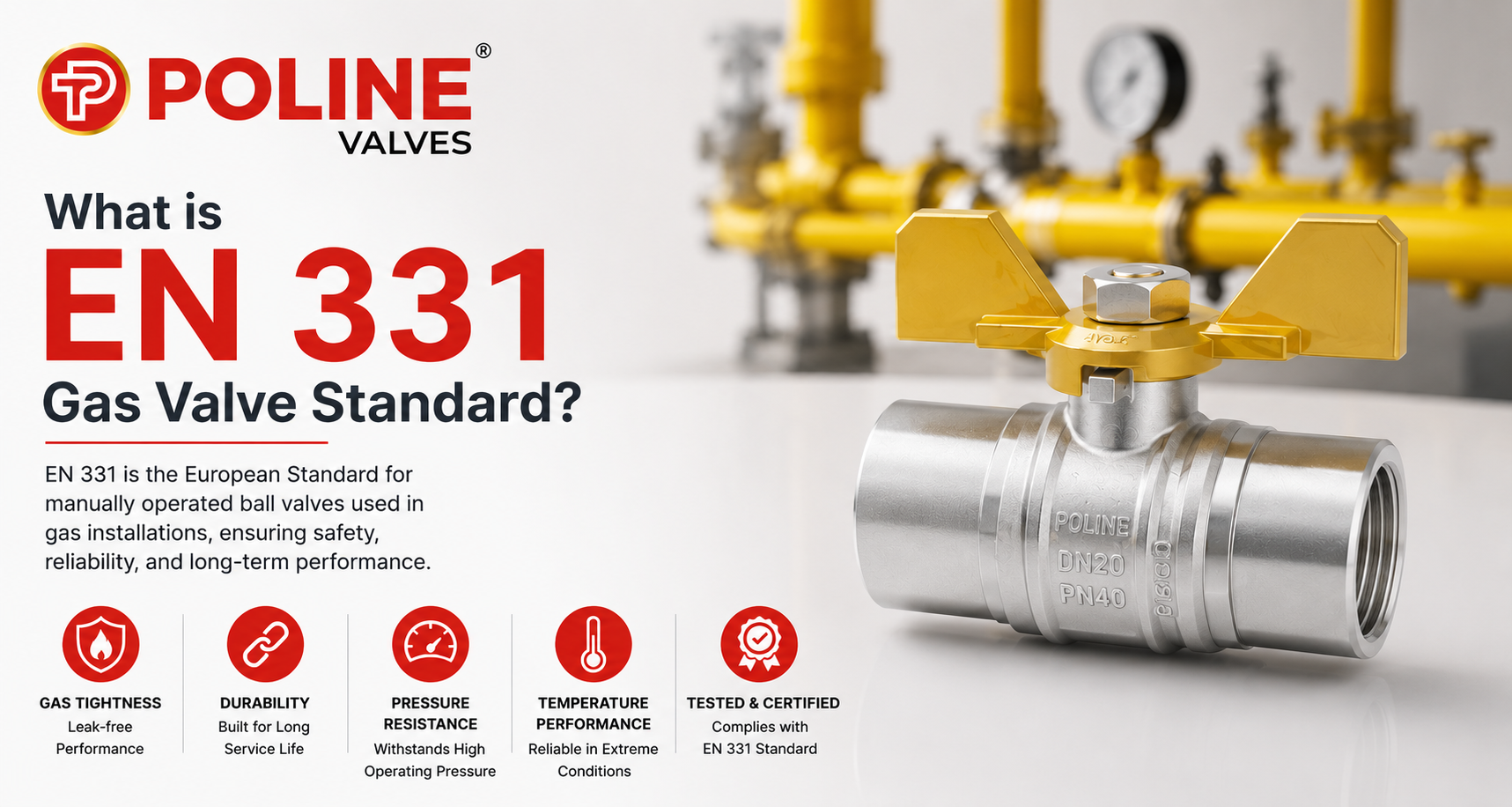
What is EN 331? A Complete Guide to the European Standard for Gas Ball Valves
Natural gas and LPG distribution systems rely on thousands of valves to safely control the flow of gas. Whether it is a residential gas connection, a commercial kitchen, or a large industrial installation, the performance of these valves directly impacts safety and reliability.
This is where EN 331 comes into the picture.
EN 331 is one of the most widely recognized standards for gas valves and is frequently specified by gas utilities, consultants, OEMs, and city gas distribution companies across Europe, the Middle East, and Asia. Understanding this standard can help buyers, engineers, and project professionals select the right valve for gas applications.
What is EN 331?
EN 331 is a European Standard that specifies the requirements and testing procedures for manually operated ball valves and closed-bottom taper plug valves used in gas installations.
The standard covers valves intended for use in gas supply systems and gas-consuming equipment, ensuring they provide reliable shut-off performance and long-term operational safety.
In simple terms, EN 331 ensures that a gas valve has been designed, manufactured, and tested to perform safely under actual operating conditions.
Why Was EN 331 Developed?
Gas distribution systems operate under demanding conditions where even a small leakage can create significant safety risks. To address these concerns, EN 331 establishes strict requirements for valve performance, durability, and leak tightness.
The standard helps ensure that:
- Gas valves provide secure shut-off.
- Leakage risks are minimized.
- Valves remain reliable throughout their service life.
- Products meet internationally accepted safety requirements.
- End users and gas utilities can confidently use the valves in critical applications.
For many gas projects, compliance with EN 331 is considered a key qualification requirement during product approval and procurement.
What Types of Valves Are Covered Under EN 331?
EN 331 primarily applies to:
- Brass Ball Valves
- Gas Isolation Valves
- Appliance Valves
- Plug Valves
- Manually Operated Shut-Off Valves
These valves are commonly installed in:
- Residential gas connections
- Gas meter installations
- Commercial buildings
- Industrial gas systems
- City Gas Distribution (CGD) networks
- LPG distribution systems
Key Requirements of EN 331
To achieve compliance, a valve must successfully pass several performance and safety tests.
1. Gas Tightness Performance
One of the most important requirements is leak tightness.
The valve must provide effective sealing in both open and closed positions to prevent gas leakage under specified operating pressures.
This testing helps ensure safe operation throughout the product's service life.
2. Mechanical Strength
Gas valves are subjected to mechanical loads during installation and operation.
EN 331 requires valves to withstand these loads without deformation, cracking, or loss of performance.
Components such as the valve body, stem, seats, and operating mechanism are evaluated for structural integrity.
3. Endurance Testing
A gas valve may be operated thousands of times during its life.
To verify durability, valves undergo repeated opening and closing cycles under controlled conditions.
This testing confirms that the valve continues to operate smoothly while maintaining its sealing performance.
4. Pressure Resistance
Valves must safely withstand pressures higher than normal operating conditions.
Pressure testing validates the strength of the valve body and critical components, ensuring reliable performance during pressure fluctuations.
5. Temperature Performance
Gas installations can experience varying environmental temperatures.
EN 331 includes testing requirements to verify valve performance across a defined temperature range, ensuring dependable operation in different climates.
6. Operational Reliability
The standard also evaluates:
- Operating torque
- Handle strength
- Stem performance
- Functional reliability
These requirements ensure the valve remains easy to operate while maintaining safe shut-off characteristics.
Industries That Commonly Specify EN 331 Valves
EN 331 compliant valves are widely used across various sectors.
Residential Applications
- Domestic gas pipelines
- Apartment gas connections
- Gas meter assemblies
- Household gas appliance installations
Commercial Installations
- Hotels
- Restaurants
- Hospitals
- Educational institutions
- Shopping complexes
Industrial Facilities
- Manufacturing plants
- Industrial burners
- Boiler systems
- Process gas installations
City Gas Distribution (CGD) Networks
Many gas utility companies and distribution networks specify EN 331 compliant valves because of their proven safety and performance characteristics.
Benefits of Using EN 331 Certified Gas Valves
Enhanced Safety
The rigorous testing requirements significantly reduce the risk of gas leakage and operational failures.
Proven Reliability
Valves are tested for long-term performance, helping ensure dependable operation over many years.
International Acceptance
EN 331 is recognized across numerous countries and industries, making it easier for manufacturers and project developers to meet customer requirements.
Improved Product Confidence
Certification provides assurance that the valve has been independently assessed against recognized performance standards.
Suitable for Critical Applications
Because of their high safety standards, EN 331 compliant valves are commonly selected for gas distribution networks and gas appliance systems.
How to Verify an EN 331 Certified Valve
When evaluating a valve supplier, buyers should request:
- EN 331 Test Report
- Certificate of Compliance
- Third-Party Certification Details
- Technical Data Sheet
- Traceability Information
- Quality Management Certifications
It is also advisable to verify the authenticity of certificates directly with the issuing certification body whenever possible.
Choosing the Right Gas Valve for Your Project
While EN 331 compliance is an important factor, valve selection should also consider:
- Operating pressure
- Type of gas
- End connection requirements
- Installation environment
- Temperature conditions
- Utility approval requirements
Working with a reputable manufacturer that maintains strict quality control and testing procedures can help ensure long-term system reliability.
Conclusion
EN 331 is one of the most important international standards for gas ball valves and gas shut-off valves. It establishes stringent requirements for leak tightness, durability, pressure resistance, and operational safety, making it a trusted benchmark for gas distribution systems worldwide.
Whether you are a gas utility company, project consultant, contractor, OEM, or distributor, selecting EN 331 compliant valves helps improve safety, reliability, and confidence in your gas installation.