
When selecting a valve for water, gas, HVAC, plumbing, or industrial applications, one of the most important specifications you will encounter is the PN rating. Many buyers notice markings such as PN16, PN25, or PN40 on valves but are often unsure what these numbers actually mean and how they affect valve performance.
Understanding PN ratings is essential because choosing the wrong pressure rating can lead to leakage, premature valve failure, safety risks, and costly maintenance.
In this guide, we'll explain everything you need to know about PN ratings in valves, including their meaning, applications, selection criteria, and common misconceptions.
What Does PN Mean in Valves?
PN stands for "Pressure Nominale", a term derived from European standards. It indicates the nominal pressure class of a valve, flange, fitting, or piping component.
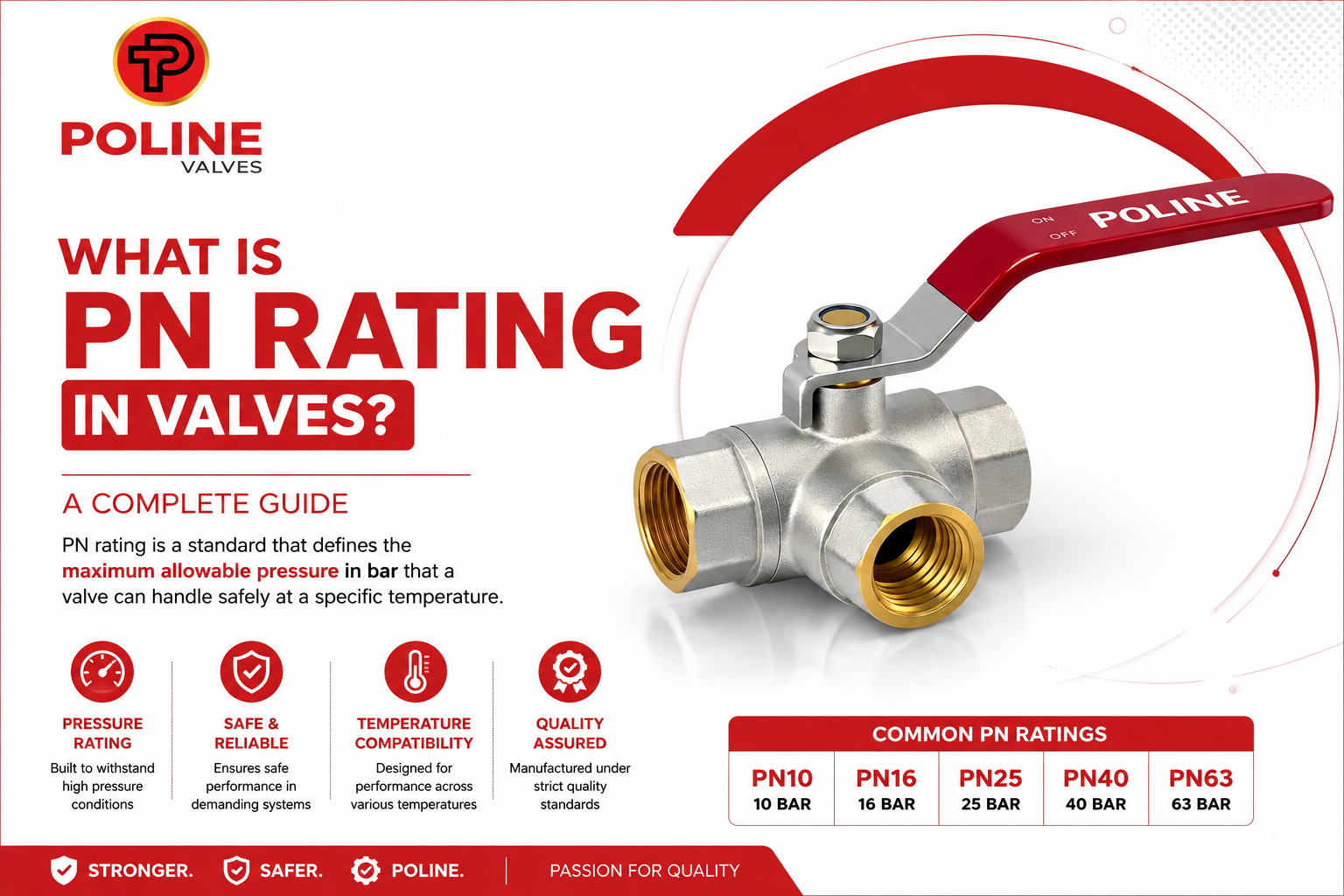
The PN number generally represents the maximum allowable pressure in bar at a reference temperature, typically around 20°C.
For example:
| PN Rating | Approximate Pressure |
|---|---|
| PN10 | 10 Bar |
| PN16 | 16 Bar |
| PN25 | 25 Bar |
| PN40 | 40 Bar |
| PN63 | 63 Bar |
A valve marked PN25 is designed to operate safely under conditions up to 25 bar pressure, subject to temperature limitations and applicable standards.
Why is PN Rating Important?
The PN rating helps engineers and buyers ensure that a valve is suitable for the operating conditions of a system.
A properly selected pressure rating provides:
- Safe operation under working pressure
- Longer service life
- Reduced risk of leakage
- Compliance with industry standards
- Improved reliability in critical applications
Using a valve with a lower pressure rating than the system pressure can lead to equipment damage and operational failures.
Common PN Ratings Used in Valves
PN10 Valves
PN10 valves are commonly used in:
- Residential plumbing systems
- Low-pressure water distribution
- Irrigation networks
- Utility services
These valves are generally suitable where operating pressures remain relatively low.
PN16 Valves
PN16 is one of the most widely used pressure ratings worldwide.
Typical applications include:
- Commercial plumbing
- Water treatment plants
- HVAC systems
- Building services
- General industrial water lines
PN16 valves provide a good balance between performance and cost.
PN25 Valves
PN25 valves are designed for medium to high-pressure applications.
Common uses include:
- Industrial process lines
- Compressed air systems
- Natural gas installations
- Boiler feed systems
- Chemical processing plants
Many high-quality forged brass ball valves are manufactured to PN25 standards to ensure reliable performance under demanding conditions.
PN40 and Above
Higher pressure classes such as PN40, PN63, and PN100 are typically used in:
- Oil and gas facilities
- Power generation plants
- Petrochemical industries
- High-pressure industrial systems
These applications require enhanced strength and stringent testing.
PN Rating vs Working Pressure
One of the most common misunderstandings is assuming that PN rating always equals the actual operating pressure.
In reality, several factors influence the allowable pressure:
Temperature
As fluid temperature increases, material strength decreases. Therefore, the maximum allowable pressure may reduce at elevated temperatures.
For example, a PN25 brass ball valve may not be capable of handling 25 bar continuously at very high temperatures.
Material
Pressure capability also depends on valve body material:
- Brass
- Bronze
- Ductile Iron
- Carbon Steel
- Stainless Steel
Different materials react differently under pressure and temperature conditions.
Design Standards
International standards define pressure-temperature relationships and testing requirements.
How to Choose the Right PN Rating
When selecting a valve, consider the following factors:
1. Operating Pressure
Always choose a valve whose pressure rating exceeds the system's maximum operating pressure.
For example:
- System Pressure: 12 Bar
- Recommended Valve: PN16 or higher
2. Fluid Type
Different media impose different stresses on valve components.
Examples include:
- Water
- Natural Gas
- Steam
- Air
- Chemicals
3. Operating Temperature
Higher temperatures generally require additional safety margins.
4. Future System Expansion
If future pressure increases are possible, selecting a higher PN rating can help avoid replacement costs later.
PN Rating vs ANSI Class Rating
European and international markets commonly use PN ratings, while North American systems often use ANSI pressure classes.
A rough comparison is shown below:
| PN Rating | Approximate ANSI Class |
|---|---|
| PN20-PN25 | Class 150 |
| PN40-PN50 | Class 300 |
| PN100 | Class 600 |
However, these ratings are not directly interchangeable because pressure-temperature calculations differ between standards.
Always verify compatibility before installation.
How to Identify a Valve's PN Rating
Manufacturers typically mark the PN rating directly on the valve body.
Common markings include:
- PN16
- PN25
- PN40
Other markings may indicate:
- Valve size
- Material grade
- Manufacturer name
- Flow direction
- Applicable standards
Checking these markings before installation helps ensure correct product selection.
Applications of PN-Rated Brass Ball Valves
Brass ball valves with PN ratings are widely used because of their:
- Corrosion resistance
- Durable construction
- Smooth quarter-turn operation
- Low maintenance requirements
- Reliable shut-off performance
Typical industries include:
- Plumbing
- Water distribution
- City Gas Distribution (CGD)
- HVAC systems
- Industrial utilities
- Compressed air systems
For demanding applications, forged brass ball valves with PN25 ratings are often preferred due to their strength and reliability.
Common Mistakes When Selecting Valve Pressure Ratings
Avoid these common errors:
Choosing Based Only on Pipe Pressure
Always account for pressure surges and transient conditions.
Ignoring Temperature Effects
Pressure ratings can decrease significantly at elevated temperatures.
Mixing Different Standards
PN and ANSI ratings should not be assumed equivalent without verification.
Selecting the Lowest-Cost Option
A higher-quality valve with the correct pressure rating usually provides lower lifecycle costs.
Frequently Asked Questions (FAQs)
What does PN16 mean on a valve?
PN16 indicates that the valve belongs to a nominal pressure class of 16 bar under specified reference conditions.
Is PN25 better than PN16?
PN25 can handle higher pressure than PN16, making it suitable for more demanding applications. However, the correct choice depends on system requirements.
Can a PN16 valve be used in a PN25 system?
No. Using a lower-rated valve in a higher-pressure system may lead to failure and safety risks.
Where are PN25 brass ball valves commonly used?
PN25 brass ball valves are widely used in industrial water systems, compressed air lines, gas applications, and process industries.
Conclusion
Understanding valve PN ratings is crucial for ensuring system safety, reliability, and long-term performance. Whether you're designing a new installation or replacing an existing valve, selecting the correct pressure rating helps prevent failures and ensures compliance with industry standards.
From residential plumbing to industrial process applications, PN ratings provide a simple and standardized way to determine whether a valve is suitable for the pressures it will encounter in service.
When evaluating brass ball valves, always consider operating pressure, temperature, application requirements, and applicable standards before making your final selection.