
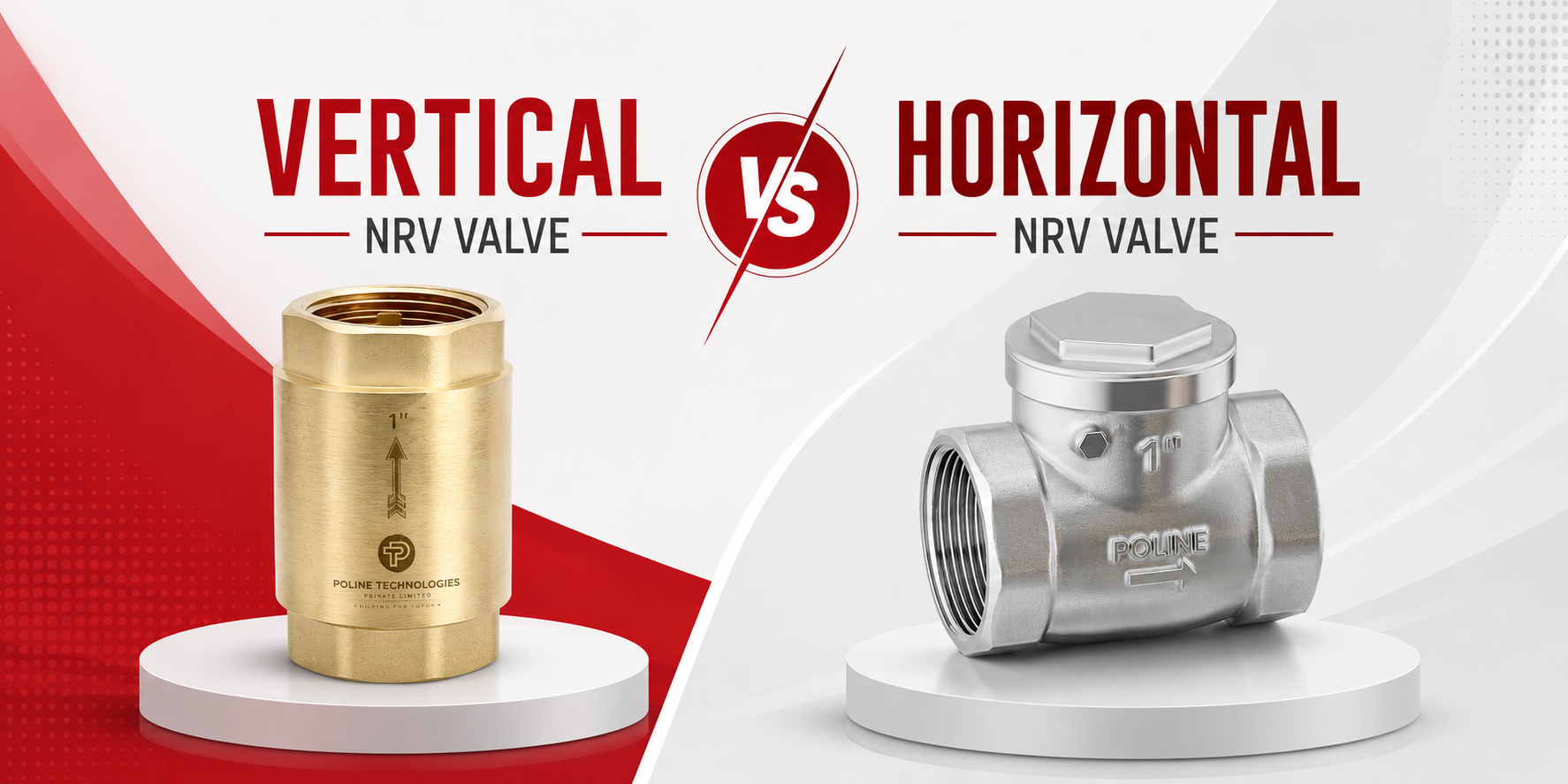
In any piping system, controlling the direction of flow is just as important as controlling pressure. Reverse flow can damage pumps, reduce efficiency, and create unnecessary maintenance problems. That is why NRV valves are considered an essential component in water, plumbing, industrial, and pumping applications.
At Poline Valve, we manufacture durable and reliable NRV valves designed for smooth operation and long service life across various industrial and commercial applications.
One of the most common questions during valve selection is:
Should you use a Vertical NRV or a Horizontal NRV?
While both valves perform the same function, their installation position and operating conditions make a major difference in performance.
What is an NRV Valve?
An NRV (Non Return Valve), also called a Check Valve, allows fluid to flow in only one direction. When the flow stops or reverses, the valve automatically closes to prevent backflow.
NRV valves help:
- Protect pumps from reverse rotation
- Maintain pipeline pressure
- Prevent water hammer
- Reduce equipment damage
- Improve overall system efficiency
Because they work automatically, they are widely used in residential, commercial, and industrial piping systems.
What is a Vertical NRV Valve?
A Vertical NRV Valve is specifically designed for vertical pipeline installation where the flow direction moves upward.
In this design, the internal disc or piston opens when fluid pressure increases. Once the flow stops, gravity helps the disc return to its closed position, preventing reverse flow instantly.
Common Applications of Vertical NRV Valve
Vertical NRV valves are commonly used in:
- Borewell systems
- Vertical water risers
- Pump discharge lines
- Industrial utility pipelines
- High-rise plumbing systems
Advantages of Vertical NRV Valve
Fast Closing Action - The gravity-assisted closing mechanism provides quick shut-off performance.
Compact Installation - These valves require less installation space compared to some horizontal designs.
Better Pump Protection - Ideal for vertical pumping systems where reverse flow can damage pumps.
Low Maintenance - Simple internal construction ensures reliable long-term operation.
What is a Horizontal NRV Valve?
A Horizontal NRV Valve is installed in horizontal pipelines where the flow moves in a straight direction.
The valve opens when forward pressure is created and closes automatically when the pressure drops or flow reverses.
Horizontal NRV valves are widely preferred in large distribution networks and continuous-flow systems.
Common Applications of Horizontal NRV Valve
You will commonly find Horizontal NRV valves in:
- Water supply systems
- HVAC lines
- Fire fighting pipelines
- Industrial processing plants
- Pump rooms
- Commercial plumbing systems
Advantages of Horizontal NRV Valve
Smooth Flow Characteristics - The internal design allows smoother fluid passage with lower pressure drop.
Easy Maintenance Access - Horizontal installation makes inspection and servicing more convenient.
Suitable for Large Pipelines - These valves are ideal for high-flow industrial applications.
Reliable Long-Term Operation - Designed for continuous-duty systems requiring stable performance.
Difference Between Vertical and Horizontal NRV Valve
| Feature | Vertical NRV Valve | Horizontal NRV Valve |
|---|---|---|
| Installation Direction | Vertical Pipeline | Horizontal Pipeline |
| Flow Direction | Bottom to Top | Straight Flow |
| Closing Method | Gravity Assisted | Pressure Assisted |
| Space Requirement | Compact | Requires Horizontal Space |
| Common Usage | Borewell & Vertical Lines | Distribution Pipelines |
| Maintenance Access | Moderate | Easier |
Which NRV Valve Should You Choose?
Selecting the right NRV valve depends mainly on your pipeline layout and application conditions.
Choose Vertical NRV Valve When:
- The pipeline is vertical
- Flow direction is upward
- Space is limited
- Borewell or riser applications are involved
Choose Horizontal NRV Valve When:
- The pipeline runs horizontally
- Continuous flow is required
- Maintenance accessibility is important
- Large-volume flow systems are used
Choosing the wrong valve orientation can affect performance, sealing efficiency, and equipment life.
Importance of NRV Valves in Pumping Systems
Many pump failures occur due to reverse flow problems. Without a properly installed NRV valve, fluid can flow backward when the pump stops, causing:
- Pump impeller damage
- Pressure shocks
- Leakage issues
- Increased maintenance costs
- Reduced equipment life
A good quality Non Return Valve helps maintain system stability while protecting critical equipment.
Why Industries Prefer Quality NRV Valves
Industrial piping systems demand valves that can withstand pressure fluctuations, continuous operation, and changing flow conditions.
At Poline Valves, our NRV valve range is designed for:
- Reliable sealing performance
- Strong body construction
- Long operational life
- Efficient flow control
- Industrial and plumbing applications
Our valves are suitable for water systems, industrial utilities, commercial plumbing, and pumping installations across India.
Frequently Asked Questions
What is the function of an NRV valve?
An NRV valve prevents reverse flow in a pipeline and protects pumps and equipment from backflow damage.
Where are Vertical NRV valves used?
Vertical NRV valves are mainly used in borewell lines, vertical risers, and upward-flow pumping systems.
Where are Horizontal NRV valves used?
Horizontal NRV valves are commonly installed in water distribution systems, industrial pipelines, and HVAC applications.
Which NRV valve is better?
Both valves are effective when installed in the correct orientation. The selection depends on pipeline direction and system requirements.
Why is NRV valve installation important?
Proper NRV valve installation improves pump safety, system efficiency, and overall pipeline reliability.
Conclusion
Both Vertical and Horizontal NRV Valves play an important role in protecting piping systems from reverse flow. While their function remains the same, selecting the correct valve according to pipeline orientation is essential for reliable and efficient operation.
Understanding the difference between these two valve types helps improve:
- Pump protection
- System performance
- Flow efficiency
- Maintenance reliability
If you are looking for dependable and high-performance NRV valve solutions, explore the industrial valve range at Poline Valves.